Ubiquiti SuperLink and USL Environmental Sensors

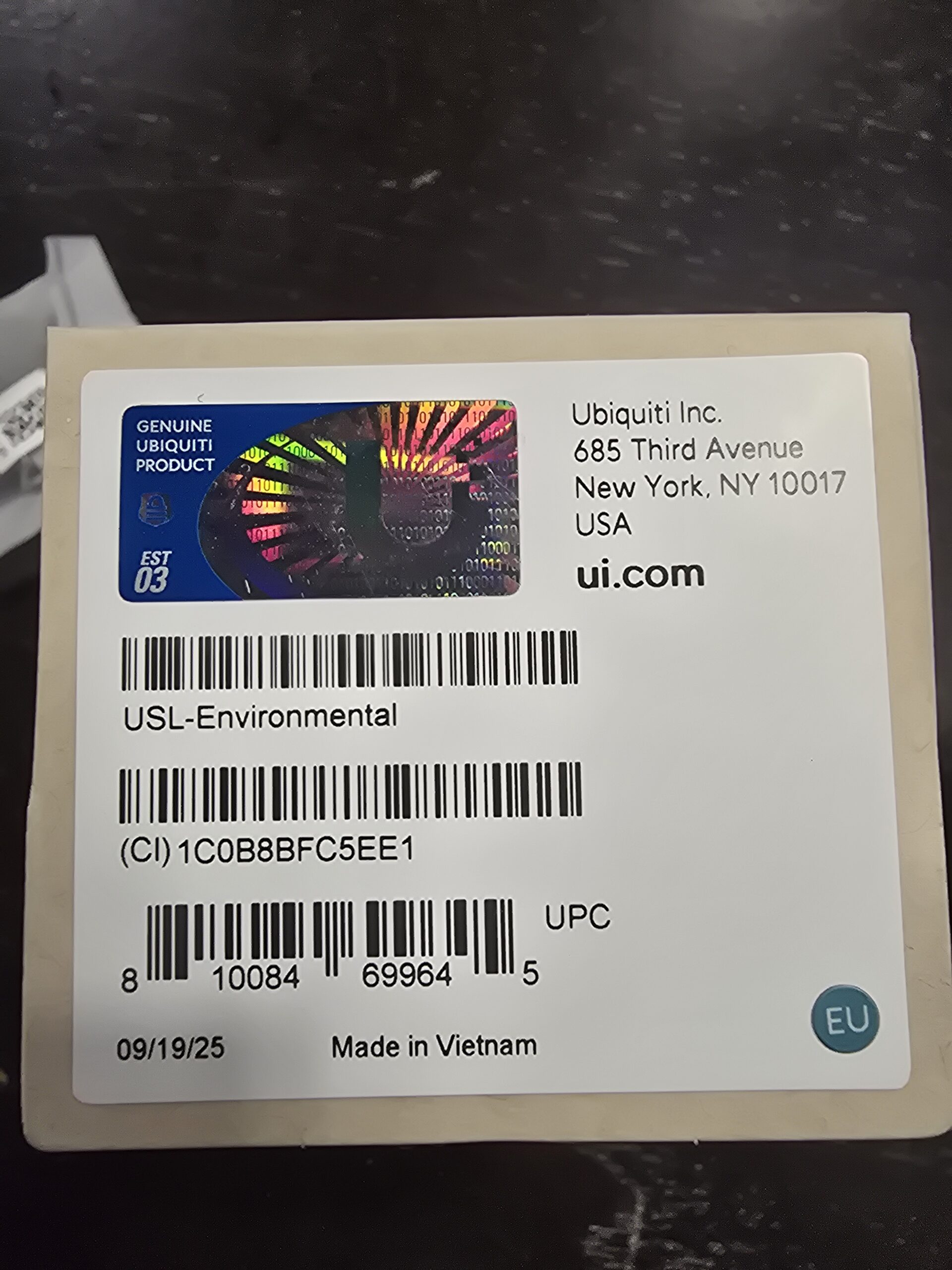
First off, lets start with a warning; If you order your SuperLink and Sensors from the Ubiquiti US store, it’s possible that you may get one of the units or in our case, all the sensors as the EU model and then a US SuperLink and well… they don’t work together. You can identify if you end up with an EU sensor or device via a small sticker on the box like this;

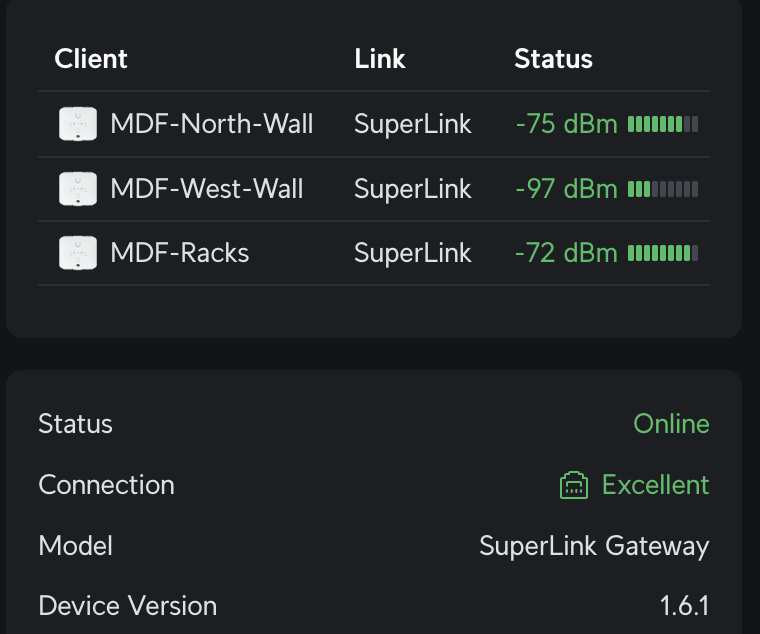
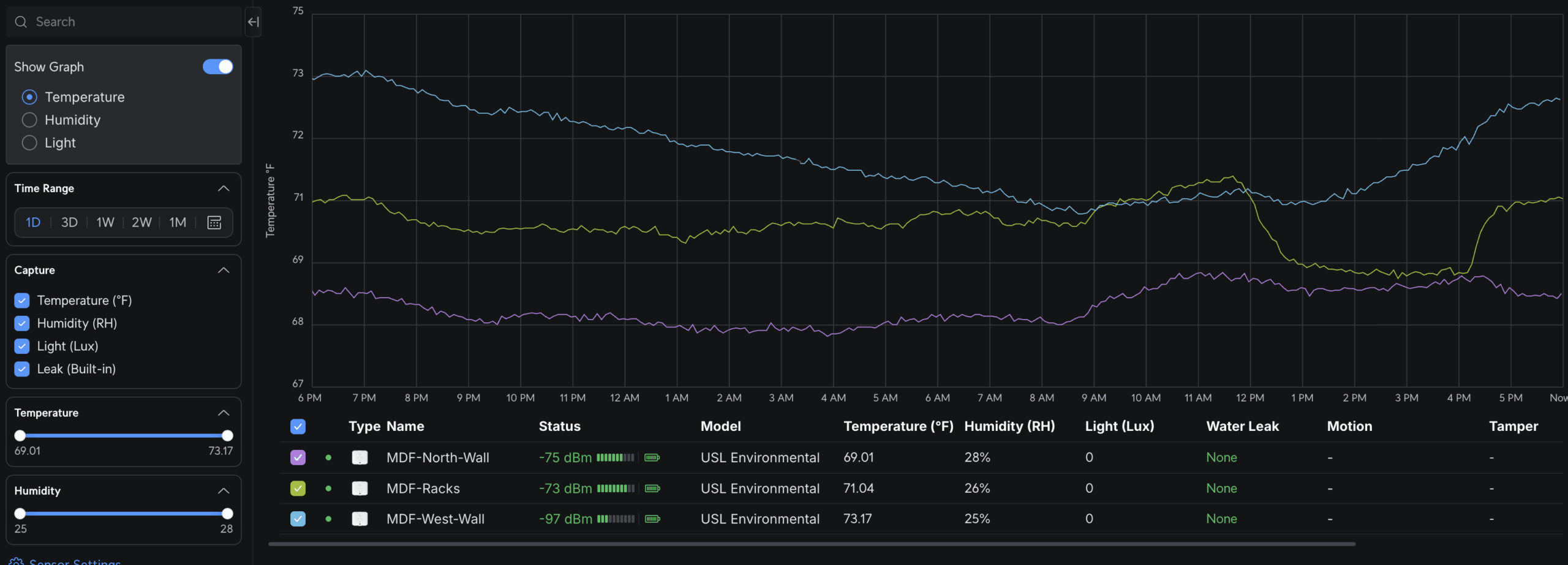
But once you get the right sensors – Kudos to UBNT for overnighting us replacements – they work very quickly, just pull the battery tab and they come up. So far so good, they’ve been pretty reliable connection wise for us and we’ve been testing them through concrete filled CMU w/ steel and we still have a reliable connection with reliable monitoring:

Overview: What is SuperLink?

The SuperLink platform from Ubiquiti is a new wireless sensor protocol & gateway ecosystem designed to integrate with the UniFi OS / UniFi Protect environment and deliver IoT sensor connectivity with enterprise-grade range, latency, and battery longevity.

Key technical highlights

  • SuperLink is designed for multi-kilometre line-of-sight range, enabling large-scale deployments (industrial, commercial, smart-buildings) rather than just short-range BLE sensors.
  • Ultra-low latency communications, tailored for security / alarm / automation sensor use-cases.
  • Efficient power management: supports long battery life endpoints (key for sensors in remote/undisturbed locations).
  • Integrated into UniFi OS: the gateway is adopted into UniFi Protect, which means your existing UniFi-based infrastructure (if you have one) can leverage the sensors and gateway.
  • For deployments: the gateway supports dual radios – Bluetooth (for legacy BLE sensors) plus the proprietary sub-GHz SuperLink radio for the new sensors.
  • In short: if you are managing facilities (data center racks, network closets, remote MSP sites) and you need environment-monitoring (temperature, humidity, water leak, light) with wide coverage and minimal wiring, the SuperLink + USL-Environmental combo offers an interesting path.

TrueNAS Core Nextcloud 23.0.2 Plugin update -> 27.0.2

A nextcloud plugin in a TrueNAS Core system that hadn’t been updated is well, a problem. If you update the Plugin it will go straight to Nextcloud 27 which well you can’t do an update like that. So here’s what we did.

Update to the latest version of 23 in the web browser and proceed with this until you get to version 25. You will notice that you cannot get past here if you’re on a Jail running 12.2 because it has PHP74 installed by default with the original Nextcloud package.

After this point you have to install PHP 8. But doing so will try and remove nextcloud-php74 package which would remove Nextcloud of course and kinda make the whole thing pointless so, we need to force that to remain installed while we gut PHP and reinstall PHP 8.

Lock the nextcloud package, we don’t want to remove it.

pkg lock nextcloud-php74

Install PHP80

pkg install php80-bcmath php80-bz2 php80-ctype php80-curl php80-dom php80-exif php80-fileinfo php80-filter php80-gd php80-gmp php80-iconv php80-intl php80-ldap php80-mbstring php80-opcache php80-pcntl php80-pcntl php80-pdo_mysql php80-pecl-APCu php80-pecl-imagick php80-pecl-redis php80-posix php80-session php80-simplexml php80-xmlreader php80-xmlwriter php80-xsl php80-zip php80-zlib

Restart FPM to reload the web UI:
/usr/local/etc/rc.d/php-fpm restart

Perform the update through to v27 from the Web UI.

Update the plugin in TrueNAS Core once the web UI update completes. THIS WILL FAIL.

Once it fails, log back into the console and manually uninstall/install the following:

pkg unlock nextcloud-php74
pkg remove nextcloud-php74-23.0.2
pkg install nextcloud-php80 nginx mysql80-server redis php80-pecl-redis wget rsync

Now, the included nextcloud version is 27.0.0 and we’re already above that and downgrading is not supported so, we need to pull the archive from nextcloud and copy over our install;

mkdir /root/scratch
cd /root/scratch
wget https://download.nextcloud.com/server/releases/latest.tar.bz2
tar -xjvf latest.tar.bz2
rsync -avz /root/scratch/nextcloud/ /usr/local/www/nextcloud/

Now we need to fix some permission:

cd /usr/loca/www
chown www:www nextcloud
cd nextcloud
chown -R www:www .htaccess .user.ini 3rdparty/ apps AUTHORS config/ console.php COPYING core/ cron.php dist/ index.html index.php lib/ occ ocm-provider/ ocs* public.php remote.php resources/ robots.txt status.php themes/ updater/ version.php

Now start redis and mysql and, restart fpm;

/usr/local/etc/rc.d/redis start
/usr/local/etc/rc.d/mysql-server start
/usr/local/etc/rc.d/php-fpm restart

All done, easy right? LOL.
iPhone / iPad / iOS / MacOS one way SMS

I recently upgraded my iPhone, and upon doing so it was shortly apparent that while my other devices were still receiving SMS forwarding, they could not reply/send SMS. iMessage worked fine, and after a frustrating number of things tried to resolve the issue. The one that did it for me was simply;

Open Settings -> Messages on your iPhone

On the Use iMessage toggle, toggle it to Off/Disable it.

Reboot your iPhone ( with iMessage still disabled )

Upon your phone coming back up, unlock it, go back to settings -> Messages, re-enable iMessage and wait about 60 seconds. SMS sending should now work from your other devices.

Sigh. That was frustrating and so simple to fix.

Site Back

Well this site is back, my career took me away for a while but I’m moving back into the FOSS space a bit and so hopefully we can get this updated.

Also it’s now running on an RPI 4B instead of a standard server which I guess is neat.. but in reality it’s just, you don’t need to burn the extra power these days even if you want to host your own site.